
Ask any decorator about the most important part of a great print job, and the answer usually starts with ink, equipment, or technique. The blank itself rarely makes the list. It gets sourced based on price, loaded onto the press, and trusted to do its job quietly in the background.
The reality is a little different. The plain shirt you choose is the foundation on which every other decision in your production workflow is dependent. The quality of your screens, the calibration of your direct-to-garment (DTG) setup, the adhesion of your direct-to-film (DTF) transfers, none of it matters if the fabric underneath was never designed with decoration in mind.
Inconsistent fibers, fuzzy surfaces, and specs meant for the consumer market rather than the production floor are the quiet contributors to most print quality issues. The result is spoilage, recalibration time, and product return long before they appear as line items on a P&L.
Next Level Apparel's entire product philosophy is based on this reality. Every thread. Every stitch. Every hem. Every detail. That's not a tagline for the end consumer. It's a production promise that tells decorators sourcing plain tees for printing exactly what they're working with before the first shirt hits the platen.
What Makes a Plain Tee Truly Print-Ready
Not all cotton is the same. Neither is all construction. The difference between a print-ready blank and a commodity tee is evident in your spoilage rate long before it’s revealed in your client's feedback.
Ring-Spun vs. Carded Open-End Cotton
Carded open-end cotton is the standard in budget blanks. It's produced by a faster, lower-cost spinning process that leaves shorter, coarser fibers on the surface. Those fibers create fuzz. Fuzz creates uneven ink absorption. And uneven ink absorption leads to inconsistent results across a run, no matter how dialed in your equipment is.
Ring-spun cotton goes through an additional process that aligns and twists the fibers into a tighter, smoother yarn. The result is a cleaner surface with less fiber breakout.
For decorators, that translates to:
-
Sharper edges on screen prints
-
More defined detail in DTG
-
Better edge adhesion on DTF transfers
-
Less fiber breakout interfering with ink lay-down
The 1810 Ideal Tubular T-Shirt from Next Level Apparel uses 24-singles carded ring-spun cotton, a construction that delivers the smooth face of ring-spun at a heavyweight 5.6 oz (185g). That combination matters because most ring-spun tees in this weight category sacrifice surface quality for cost. The 1810 doesn't.
Fabric Weight
Weight is more than just a hand-feel preference. A 5.6-oz fabric has enough body to hold ink without distorting under pressure. Lighter plain T-shirts for printing flex and shift during screen printing, which can introduce registration errors in multi-color runs. They also absorb heat unevenly under a heat press, which can affect DTF adhesion and lead to premature cracking on heavy-coverage transfers.
Surface Consistency and Knit Structure
Stray fibers and inconsistent knit structure are the decorator's version of an uneven canvas. Each decoration method fails differently on a poor surface:
-
Screen printing: ink bleeds into the gaps between fibers, softening edges
-
DTG: the printhead compensates for surface variation, producing muddy detail
-
DTF: transfers lose edge contact and start lifting after the first wash cycle
Lot-to-lot consistency matters just as much as per-shirt quality. A blank that prints cleanly on your sample run but delivers variable results across a 500-piece order costs you time, ink, and materials. Standardized construction across production runs isn't a luxury; it's a production requirement for any shop running repeat programs.
Tubular Construction
Tubular garments are knit in the round, which eliminates side-seamed construction. For decorators, it means an uninterrupted print area across the chest, back, and sides. No seam to catch the squeegee. No ridge to distort a DTF transfer. No interruption in an all-over print.
The 1810's tubular construction also includes shoulder-to-shoulder binding, which stabilizes the garment's shape during decoration and keeps sizing consistent across a bulk program. A shirt that torques out of shape between pressing and delivery is a customer service problem waiting to happen.
How the Blank Affects Each Printing Method
Screen Printing
Smooth, heavyweight cotton allows ink to sit cleanly on the surface rather than absorbing into the fiber. On a ring-spun blank like the 1810, you get sharper edges, better opacity on dark-color runs, and fewer passes necessary to achieve full coverage. On a carded open-end blank, you're fighting the fabric as much as you're fighting the ink.
Bottom line: ring-spun + 5.0 oz or heavier = fewer passes, sharper edges, less ink consumption per unit.
DTG
High cotton content is non-negotiable for DTG. The process bonds ink directly to the fiber, and ring-spun cotton provides the ink with a more consistent surface area for adhesion. The result is stronger color vibrancy and wash durability than you'd get from a lower-quality fabric. The 1810's 100% ring-spun cotton construction makes it well-suited for DTG, where fabric inconsistency translates directly into soft, muddy detail.
Bottom line: 100% cotton is non-negotiable, and ring-spun consistency is what separates retail-quality detail from muddy proofs.
DTF / Heat Transfer
DTF transfers adhere best to smooth, stable surfaces. The tight weave of ring-spun cotton ensures reliable contact between the transfer film and the entire print area. With a looser or fuzzier fabric, you get edge lift and cracking that results after the first wash, not during the initial press check, where you'd catch it. The 1810's surface consistency significantly reduces that risk.
Bottom line: prioritize surface consistency over weight, since edge lift appears after the first wash, not at press check.
Sublimation
Sublimation requires a high polyester content to bond the dye to the fiber. For polyester or poly-blend sublimation programs, Next Level Apparel's CVC and performance blend styles are the appropriate options.
Bottom line: if the blank is cotton, sublimation isn't the right method. You'll need polyester content for the dye to bond.
The Real Cost of a Cheap Blank
A lower per-unit cost on a budget blank T-shirt for printing can look like a margin improvement on a spreadsheet. On the production floor, it rarely is.
A cheap blank costs you in four ways your spreadsheet won't catch until the order is already running:
-
Higher spoilage rates from misprints, uneven ink absorption, and fabric defects that only surface under print conditions
-
More equipment recalibration between lots when color consistency varies
-
Increased customer returns when a shirt that looked good in the proof doesn't withstand regular washing
-
Lost repeat business when the end customer stops wearing the shirt after a handful of washes
Also consider the end-product life cycle. A shirt that is worn 50 or more times is a fundamentally different marketing asset for your client than one that pills and fades after 10 washes. When a brand decorator puts their client's logo on a shirt, that shirt creates an impression every time it's worn. A shirt that ends up at the bottom of a drawer after two months isn't delivering the value the client paid for.
Next Level Apparel describes this scenario as the difference between a disposable product and a wearable brand equity. The blank you choose determines which one you're delivering.
Spotlight: The 1810 Ideal Tubular T-Shirt
The 1810 was engineered with decorators in mind. Here are the specs that matter for production:
-
100% carded ring-spun cotton, 24 singles, 185g (5.6 oz)
-
Tubular garments have no side-seamed construction, providing an uninterrupted print canvas
-
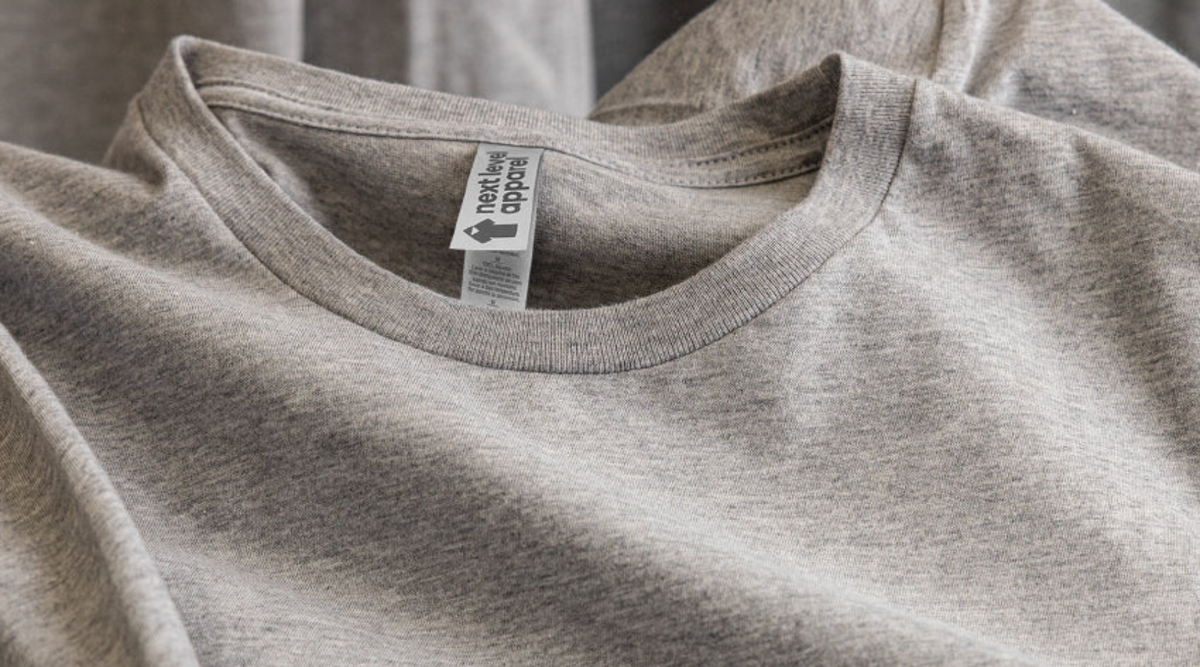
Crew neck with 1x1 rib neckband and self 3/8" shoulder-to-shoulder binding
-
Tear-away label, making it private-label ready for brand decorators
-
XS–4XL size range, covering men's, women's, and youth programs in a single SKU
-
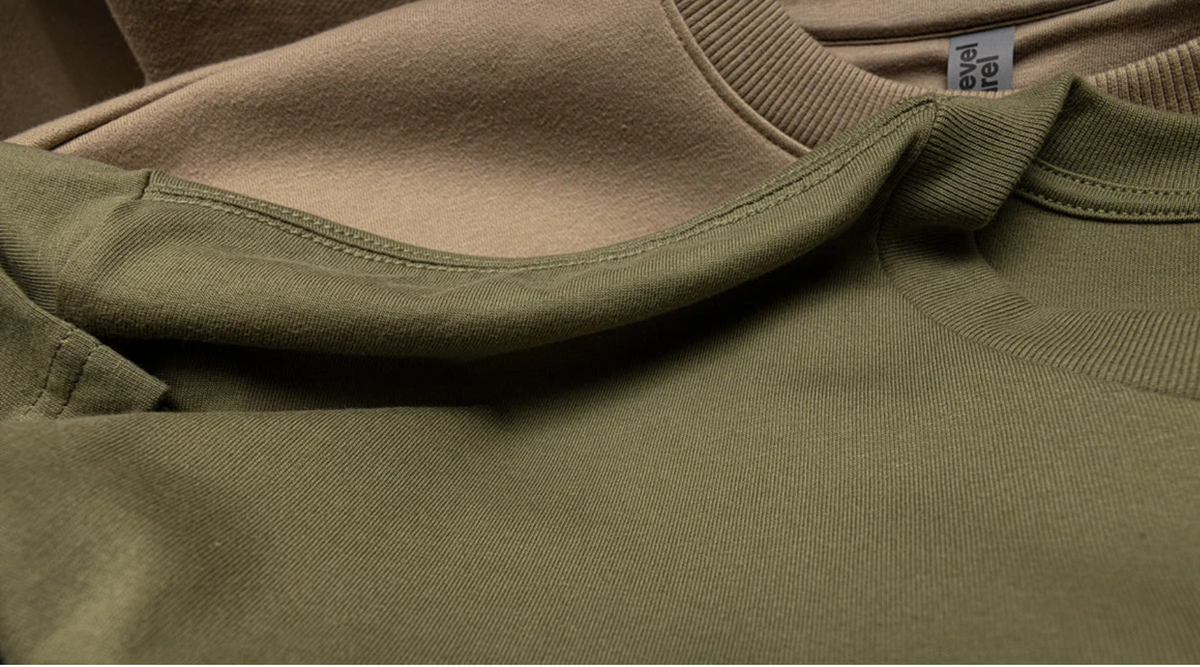
Available in a complete range of 23 colors, including the Harbor Blue featured here
-
Consistent lot-to-lot construction, which eliminates production variables across repeat programs
The 1810 earns its recommendation through construction details that translate directly into cleaner prints, fewer remakes, and a finished product that performs at retail quality. For decorators standardizing their blank selection across client programs, it's a reliable foundation.
How to Evaluate a Plain T-Shirt Before You Buy in Bulk
Before committing to the volume on any plain T-shirt for printing, run this evaluation:
-
Order a sample and run a test print across your primary decoration method. Screen, DTG, and DTF each stress the fabric differently. A blank that performs in one method may not perform in another.
-
Assess the fabric face under direct light. Look for fuzz, uneven texture, or inconsistent knit structure. A visually rough surface will produce a rough print.
-
Wash-test for shrinkage and torque before locking in sizing for a program. Unexpected shrinkage on bulk orders generates returns and client complaints.
-
Check lot-to-lot color consistency if you're running multi-order programs. Request swatches from different production batches before committing.
-
Standardize on proven styles for repeat clients. Eliminating blank variation from your production workflow removes one of the most common sources of inconsistency.
The Next Level Apparel Advantage for B2B Decorators
Decorators who standardize on premium plain T-shirts for printing spend less time troubleshooting and more time producing. The result is fewer remakes, less recalibration, and fewer customer service conversations about print quality.
Working with a supplier whose entire product line is meant to be decorated also simplifies sourcing decisions. Next Level Apparel's blanks aren't targeted to the consumer market first and adapted for decoration second.
Print-friendly construction, tear-away labels, and consistent lot-to-lot spec aren't afterthoughts. They're engineering decisions that reflect how the actual product is used on a production floor.
For decorators building long-term client programs, such consistency matters. It means the blank that printed clean on the first run prints clean on the fifth run, six months later. And that's what generates repeat business.
Ready to put a print-ready blank to the test? Explore the 1810 Ideal Tubular T-Shirt, browse the full color range in the Next Level Apparel Color Card, or download the latest catalog to plan your next program.
Frequently Asked Questions
What is the best plain shirt for printing?
The best plain shirt for printing combines a smooth, ring-spun cotton surface, a weight of at least 5.0 oz to hold ink without distortion, and consistent lot-to-lot construction across production runs. For screen printing and DTG, 100% cotton ring-spun blanks deliver the strongest results. For DTF, consistent surface texture is the priority factor.
What is the difference between ring-spun and carded open-end cotton for printing?
Ring-spun cotton undergoes an additional spinning process that produces a smoother, tighter yarn with less surface fiber breakout. Carded open-end (COE) cotton is processed faster, resulting in a coarser, fuzzier surface. For printing, ring-spun produces sharper edges, better ink adhesion, and more consistent results across a production run.
Does fabric weight affect print quality?
Yes. Heavier blanks, typically 5.0 oz and above, hold their shape under pressure and heat, which reduces registration errors in screen printing and improves adhesion uniformity in DTF. Lighter blanks flex and absorb heat inconsistently, which can affect print quality on high-coverage designs.
What is a tubular T-shirt, and why does it matter for printing?
A tubular T-shirt is knit in the round without side-seamed construction. For decorators, it means an uninterrupted print surface across the chest, back, and sides. There's no seam to interrupt a full-front or oversized print placement, and no ridge to affect squeegee pressure in screen printing or transfer contact in DTF.
Can I use the 1810 Ideal Tubular T-Shirt for sublimation?
No. The 1810 is 100% cotton, and sublimation requires a high polyester content to bond the dye to the fiber. For sublimation programs, Next Level Apparel's CVC and poly-blend styles are the appropriate options.
How do I evaluate a blank before committing to bulk?
Order a sample and run it through your primary decoration method. Evaluate the fabric face under direct light for fuzz or inconsistent knit. Wash-test for shrinkage before locking in sizing. Request swatches from multiple production lots if you're planning a repeat program and check for color consistency across batches.
What's the difference between a blank T-shirt for printing and a regular retail T-shirt?
A blank T-shirt for printing is produced with decoration in mind, with smoother fabric surfaces, consistent lot-to-lot construction, tear-away labels for private branding, and weights that hold ink and heat without distorting. A retail T-shirt is designed for the end consumer first, with priorities such as trend-driven cuts or graphic prints already in place. Decorators who standardize on purpose-built blanks reduce spoilage and achieve more consistent results across runs.


Leave a comment
All comments are moderated before being published.
This site is protected by hCaptcha and the hCaptcha Privacy Policy and Terms of Service apply.